What “Custom” Means for a Drum Brake Wheel Cylinder
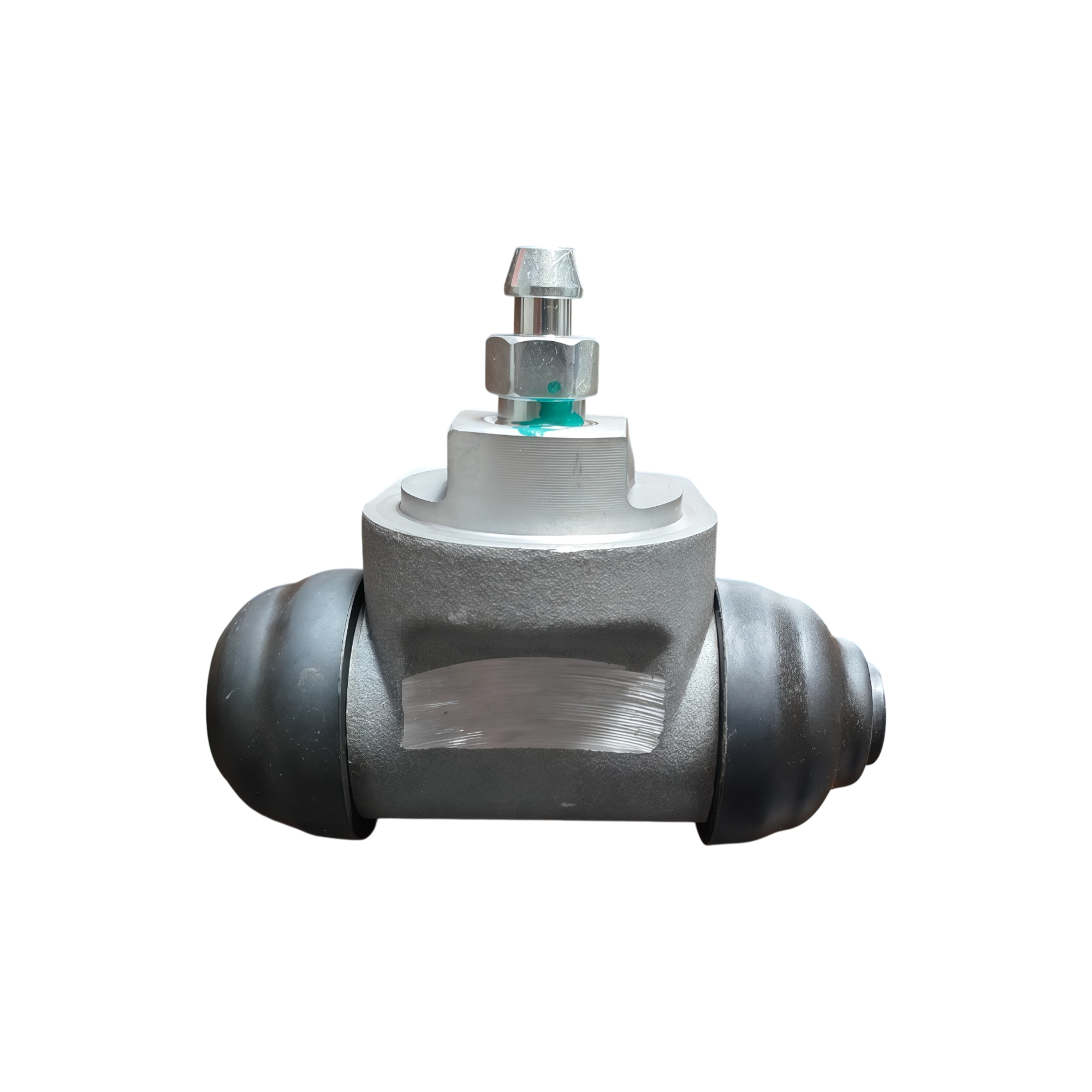
A drum brake wheel cylinder converts hydraulic pressure into outward movement of the brake shoes. In a custom program, the buyer is not simply choosing a catalog part; they are defining a variant—bore size, port configuration, mounting, bleed screw placement, boot style, and material finish—and then finding a supplier who can reproduce that definition consistently. The product family described in the supplied evidence is a cast housing with a machined bore, rubber boots at both ends, and a visible bleeder fitting, offered with order-specific variants and customisation for the automotive aftermarket.
That description sets the scope: customisation is real, but it sits on top of a stable core design. Your job as a buyer is to separate the variables you control from the characteristics that must remain fixed for the cylinder to function safely in the drum brake assembly.
Start With the Vehicle and Brake Assembly, Not the Part Number
Wheel cylinder requirements come from the brake system, not from a supplier’s catalog. Before approaching suppliers, document the application: vehicle platform, axle position, drum brake size, original cylinder part number if one exists, and any known field issues. This information anchors every later decision.
Two buyers can ask for “the same” wheel cylinder and mean different things. One may need a direct replacement with identical port angles; another may need a variant to fit a modified backing plate. Writing down the assembly context prevents a supplier from quoting a part that fits the drawing but not the vehicle.
Selection Criteria That Actually Affect Fit and Function
Custom wheel cylinder specifications should be grouped by what they control. The table below lists the criteria most likely to cause a rejection or a field failure if they are underspecified.
| Criterion | Why it matters | What to specify |
|---|---|---|
| Bore diameter and finish | Affects piston travel and seal life; a rough or out-of-tolerance bore can cause leakage or drag. | Nominal bore, tolerance band, surface finish requirement, and inspection method. |
| Housing material and casting quality | Cast housings must withstand hydraulic pressure and resist corrosion in service. | Material grade, casting process, porosity acceptance criteria, and any coating or plating. |
| Port and bleeder configuration | Thread type, angle, and bleeder screw location determine whether the part installs and bleeds correctly. | Thread standard, port angle, bleeder screw size, and cap or plug requirements. |
| Boots and seals | Rubber boots keep contamination out; seal compound must match the brake fluid. | Boot material, seal elastomer, and compatibility with DOT 3, DOT 4, or other specified fluid. |
| Mounting interface | Bolt pattern, flange shape, and overall envelope must match the backing plate. | Dimensional drawing with critical dimensions and datum references. |
| Marking and traceability | Allows you to link a delivered lot to its inspection record and production date. | Part marking content, lot coding method, and record retention expectations. |
Not every criterion carries equal weight. A bleeder screw angle that is off by a few degrees may be correctable at installation; a bore that is out of tolerance is not. Rank the criteria with your engineering team before sending an RFQ, and state which are critical-to-quality and which are negotiable.
Specification Tradeoffs Buyers Should Resolve Early
Standard bore versus application-specific bore
Sticking with a standard bore size can simplify sourcing and reduce validation effort. A custom bore may be necessary to match a particular drum brake assembly, but it usually means new tooling, new inspection criteria, and a longer validation cycle. Ask the supplier what changes when the bore moves outside their standard range, and get that answer in writing before committing.
Cast housing versus alternative constructions
The supplied product evidence describes a cast housing with a machined bore area. Castings are common for wheel cylinders, but buyers should confirm the supplier’s casting source and porosity controls. If a supplier proposes a different construction, treat it as a new design requiring its own validation, not a drop-in substitution.
Boot and seal material
Rubber boots at both ends protect the bore from dust and moisture. The seal compound must be compatible with the brake fluid specified for the vehicle. A lower-cost elastomer that swells or hardens in service can cause leaks or piston sticking. Request material data and fluid compatibility evidence rather than relying on a generic “rubber” description.
Finish and corrosion protection
Coating or plating choices affect appearance, corrosion resistance, and sometimes bore clearance. Specify the finish by standard or by a performance requirement, and ask how the supplier verifies coating thickness and adhesion. Avoid approving a finish solely from a photo.
How to Evaluate a Custom Wheel Cylinder Supplier
Supplier evaluation should produce evidence you can compare across candidates. Use the same questions for every supplier and record the answers. The following sequence works for most aftermarket programs.
1. Confirm the supplier’s actual scope
Ask whether they manufacture the housing, machine the bore, and assemble the cylinder in-house, or whether some operations are outsourced. The supplied evidence states that inspection reports are available on request; ask for a sample report early so you can see what is measured and how results are recorded.
2. Request a drawing review before a quote
A supplier who quotes without reviewing your drawing is guessing. A useful response identifies critical dimensions, proposes inspection methods, and flags any feature that cannot be met as drawn. This is also the moment to clarify units, tolerances, and datum references.
3. Ask for process and inspection documentation
Request the control plan for the bore machining and assembly steps, the inspection report format, and the criteria for lot acceptance. If the supplier cannot describe how they check bore diameter, port threads, and boot seating, that is a warning sign.
4. Validate with samples before production
Sample approval should include dimensional inspection, a visual check of boots and bleeder fitting, and a fit check on the intended brake assembly where possible. Record the sample’s measured values and use them as the baseline for production acceptance.
5. Agree on change control
Custom parts tend to evolve. Ask how the supplier handles a change to material, sub-supplier, or machining process, and require notification before implementation. Without this, a later lot may fit differently from the approved sample.
Procurement Pitfalls and Warning Signs
- Quoting from a photo. A wheel cylinder’s critical features—bore, port angle, thread—cannot be confirmed from an image. Insist on a drawing-based review.
- “Equivalent” without evidence. A supplier may claim a part is equivalent to an original number. Ask for the dimensional and material comparison that supports the claim.
- Missing inspection records. If inspection reports are promised but not shown before the order, you have no basis for lot acceptance.
- Unclear bleed screw specification. Thread standard and size must be explicit; a mismatched bleeder screw can strip or leak.
- No sample retention. Keep approved samples and their inspection data. They are your reference when a later lot is questioned.
- Ignoring packaging and storage. Boots and seals can degrade if stored improperly. Ask how the supplier protects the cylinder before shipment.
Questions to Ask Before You Place an Order
Use these questions to turn a general quotation into a verifiable offer. The answers should be specific and documented.
- Can you confirm the bore diameter, tolerance, and surface finish against our drawing?
- What is the housing material and casting source, and how is porosity controlled?
- Which seal and boot materials do you use, and what brake fluids are they compatible with?
- What does your inspection report include, and can we see a sample before ordering?
- How do you mark and trace production lots?
- What is your process for approving a custom variant and controlling changes after approval?
Next Steps for a Custom Wheel Cylinder Program
Begin with a requirements package: application details, a dimensioned drawing, critical-to-quality characteristics, and the brake fluid specification. Send it to a shortlist of suppliers and compare their drawing reviews, inspection documentation, and sample plans—not just their quotes. Approve a sample against measured values, retain the records, and agree on change control before production. That sequence reduces the risk of a custom wheel cylinder that looks right but fails at the wheel.